FDA LACF registration: how to complete FFR, FCE and SID filing for low-acid and acidified foods
FDA LACF registration explained: FFR, FCE and SID filing, choosing the correct form, validation studies, and how to stay off Import Alert 99-37 at US ports.
- Published
- 24 SEP 2026
- Reading time
- 9 min
- Written by
- Jose Thomas - PCQI Certified
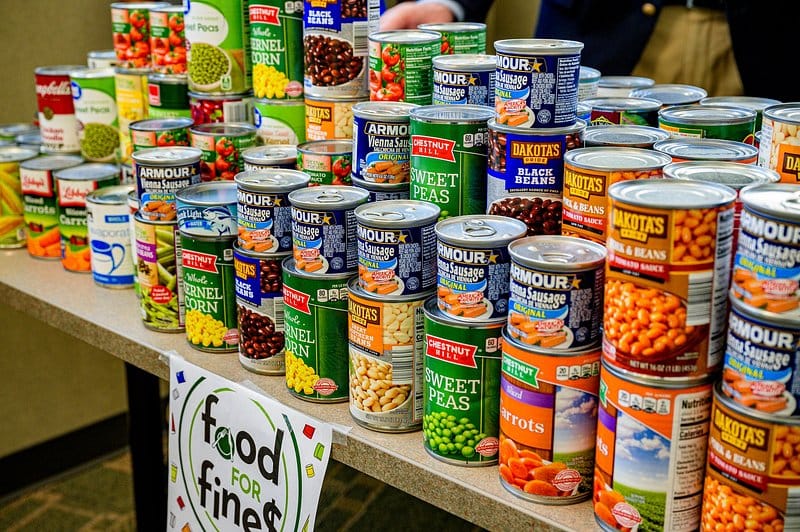
Low-acid canned foods (LACF) and acidified foods form a distinct regulatory category in the United States. FDA LACF registration involves three separate filings: a Food Facility Registration (FFR), a Food Canning Establishment (FCE) registration, and a process filing that generates a Submission Identifier (SID) for each product. This guide sets out the requirements for each filing, explains how to select the correct form for a given product, and describes when validation studies are required.
Why FDA requires special filing for low-acid and acidified foods
The regulatory framework exists because of Clostridium botulinum. Its spores survive ordinary cooking temperatures, and within a sealed, oxygen-free container they can germinate and produce botulinum toxin, one of the most potent toxins known. A contaminated container may show no change in appearance, odour or taste.
Two parameters determine whether a product falls within these regulations. The first is pH 4.6, below which C. botulinum cannot grow or produce toxin. The second is water activity (aw), a measure of the water in a food that is available to microorganisms. The regulations apply to foods with a water activity above 0.85.
Under 21 CFR 113.3, a low-acid food has a finished equilibrium pH above 4.6 and a water activity above 0.85. Under 21 CFR 114.3, an acidified food is a low-acid food to which acids or acid ingredients have been added to achieve a finished equilibrium pH of 4.6 or below. Equilibrium pH is the pH reached once the acid has distributed evenly through every component of the product, including the centre of each vegetable piece or paneer cube.
Naturally acidic foods, such as mango pulp or tomato purée, are classified as acid foods. They fall outside the mandatory LACF and acidified food requirements, although voluntary filing is strongly recommended.
FDA does not approve scheduled processes. The agency files them, may raise queries, and holds the processor fully responsible for their adequacy, so every value submitted must be supported by data.
How the FFR, FCE and SID filings fit together
The three filings are frequently confused because they are submitted through the same FDA portal, although each covers something different.
Filing | What it covers | Form |
|---|---|---|
FFR | The facility itself, for any food sold in the US | Online FFR in FURLS |
FCE registration | The plant as a processor of LACF or acidified foods | Form FDA 2541 |
SID (mandatory) | The scheduled process for one product in one container size | Form 2541d, 2541e, 2541f or 2541g |
SID (voluntary) | Documentation that a product is an acid food | Form 2541e, marked "Voluntary" |
The filings must be completed in sequence. A SID cannot be filed without an FCE number, and FDA expects the facility to hold a valid FFR throughout.
Step 1: Food Facility Registration (FFR)
Scope and information required
With few exceptions, facilities that manufacture, process, pack or hold food for consumption in the United States must register with FDA under Section 415 of the FD&C Act. The requirements are set out in 21 CFR Part 1, Subpart H. Registration carries no fee and is completed online through FDA's Unified Registration and Listing System (FURLS).
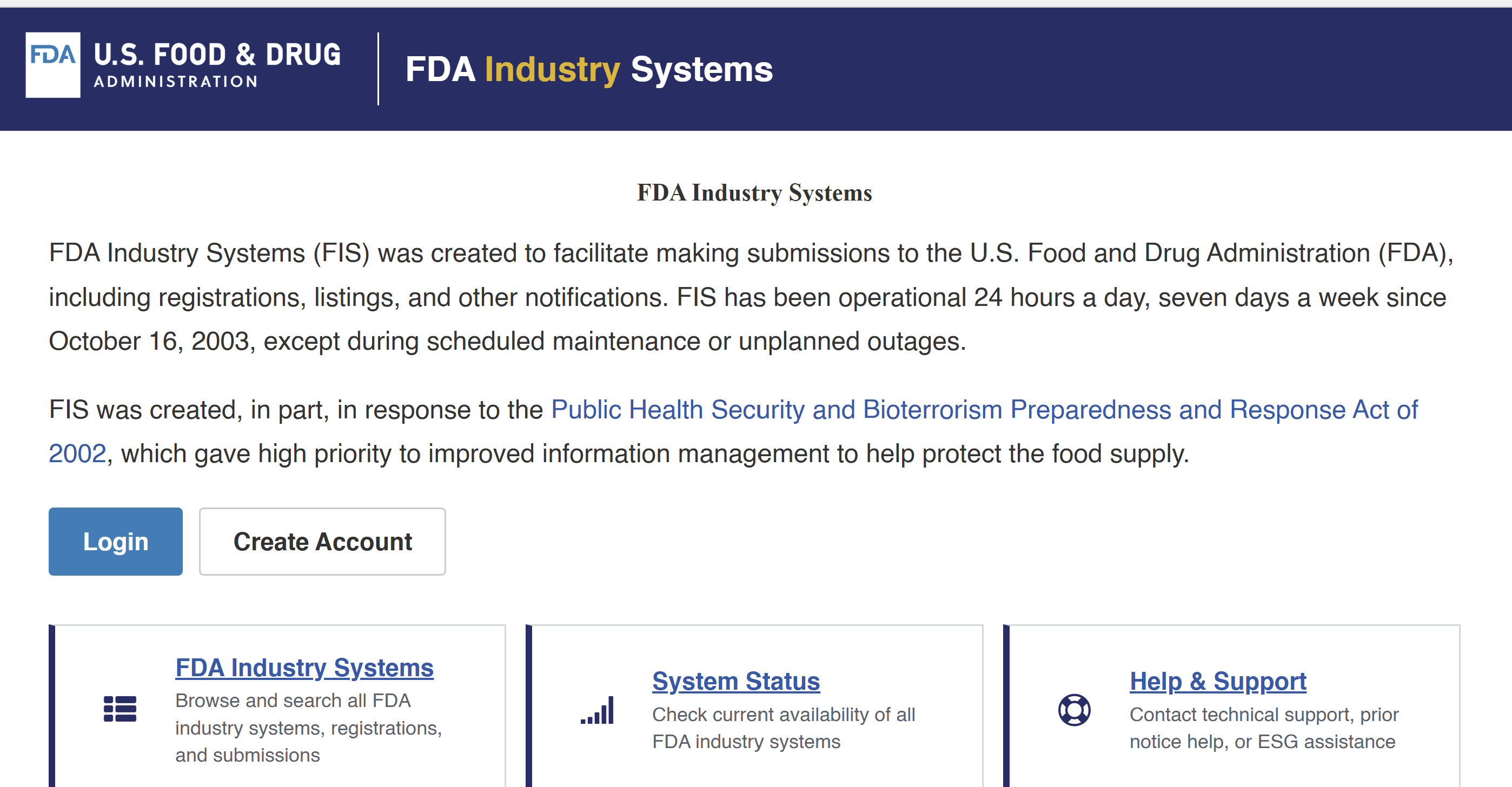
The registration requires the facility's legal name and address, emergency contact details, the food product categories handled, and a Unique Facility Identifier (UFI). FDA currently accepts the DUNS number as the UFI, so the facility should obtain one from Dun & Bradstreet before starting the registration. The registration also includes an assurance that FDA will be permitted to inspect the facility, and firms that refuse an FDA inspection can have their products refused entry into the United States.
Biennial renewal
Every registration must be renewed between 1 October and 31 December of each even-numbered year, and FDA considers a registration that is not renewed to be expired. Food from a facility without a valid registration is subject to being held at the port of entry, so renewal dates belong in the facility's regulatory calendar.
Step 2: FCE registration on Form 2541
FCE registration identifies a facility specifically as a processor of low-acid canned or acidified foods, as required under 21 CFR 108.25 and 108.35. A valid FFR does not satisfy this requirement, and treating the two as interchangeable is one of the most frequent causes of detained shipments.
Form FDA 2541 requires the plant's location, the processing methods in use and the categories of food produced. Processing methods must be stated specifically, for example still steam retort, water immersion, water spray, rotary or agitating retort, aseptic system, or acidification with hot fill. Listing every method in current use, along with those planned for upcoming products, avoids repeated amendments to the registration.
Processors must register within 10 days of first manufacturing LACF or acidified foods, and foreign processors must be registered before shipping to the United States. Once the registration is accepted, FDA issues a five-digit FCE number. This number appears on every subsequent process filing, and FDA uses it as the reference when reviewing shipments at entry.
Step 3: SID process filing for each product
Where FCE registration covers the plant, process filing documents the conditions under which each individual product is made safe.
What a SID covers
A process filing describes the scheduled process: the time, temperature and other conditions that a qualified person has established as adequate for the product. The regulations require a separate filing for each product in each container size. On receipt, FDA assigns the filing a Submission Identifier (SID), a date-based reference number that the importer declares at entry.
Filings are due within 60 days of FCE registration and before any new product is packed for the US market. FDA's guidance on submitting Forms 2541, 2541d, 2541e, 2541f and 2541g explains each field of the forms.
Selecting the correct FDA form
The correct form depends on the product's natural pH, its water activity and the method by which it is made shelf stable.
Product situation | Filing route | Example products |
|---|---|---|
Natural pH 4.6 or below (acid food) | Voluntary filing on Form 2541e, with pH data attached | Mango pulp, tomato purée |
Low-acid food acidified to pH 4.6 or below | Form 2541e (acidified method, mandatory) | Mixed vegetable pickle, pickled onions, jalapeño peppers |
pH above 4.6, sterilised in a sealed container | Form 2541d (low-acid retorted method) | Retort pouch dal makhani, biryani, canned fish |
pH above 4.6, safety relies on water activity or formulation | Form 2541f (water activity/formulation control method) | Products preserved by reduced aw, salt, sugar or humectants in combination with heat |
pH above 4.6, sterilised separately and filled aseptically | Form 2541g (low-acid aseptic systems) | Aseptically packed UHT dairy drinks |
Refrigerated, fermented, jams and jellies, or aw 0.85 or below | No FCE or SID required (FFR only) | Chilled curries, dry snacks |
Voluntary filing for acid foods
Acid foods are not legally required to carry a SID, but voluntary filing is advisable. An FDA reviewer cannot determine the pH of a product from an entry declaration, and a product that resembles a low-acid or acidified food may be detained until its status is demonstrated.
Form 2541e includes a "Voluntary" option for this purpose. The processor selects it and attaches documentation supporting the determination that the product is not an acidified food, typically pH data from representative batches. The filing is then recorded against the processor's FCE number, where FDA can see it when reviewing the shipment. The instructions for Form 2541e specify what to submit.
Circumstances requiring a new filing
Each SID applies only to the conditions it describes. A change in container size, formulation, retort or any critical factor means the existing filing no longer reflects actual production. Critical factors are the variables that affect heat delivery to the product, including fill weight, headspace, particle size, initial temperature and consistency. The processor must submit a new or amended filing before shipping the modified product.
When validation studies are necessary, and why FDA requires them
Every scheduled process submitted on a SID must be supported by evidence. Under 21 CFR 113.83 and 114.83, a qualified person with expert knowledge of thermal processing or acidification must establish it, using data from the specific product. That data comes from validation studies, which are required for every LACF and acidified product filed.
FDA requires validation because testing the finished product cannot confirm its safety. Botulinum toxin produces no visible indication, and sampling a small number of containers from a large batch provides limited assurance. The adequacy of a process can only be established by measuring the lethality or acidification it delivers before the product is released to market.
Retorted LACF: temperature distribution and heat penetration studies
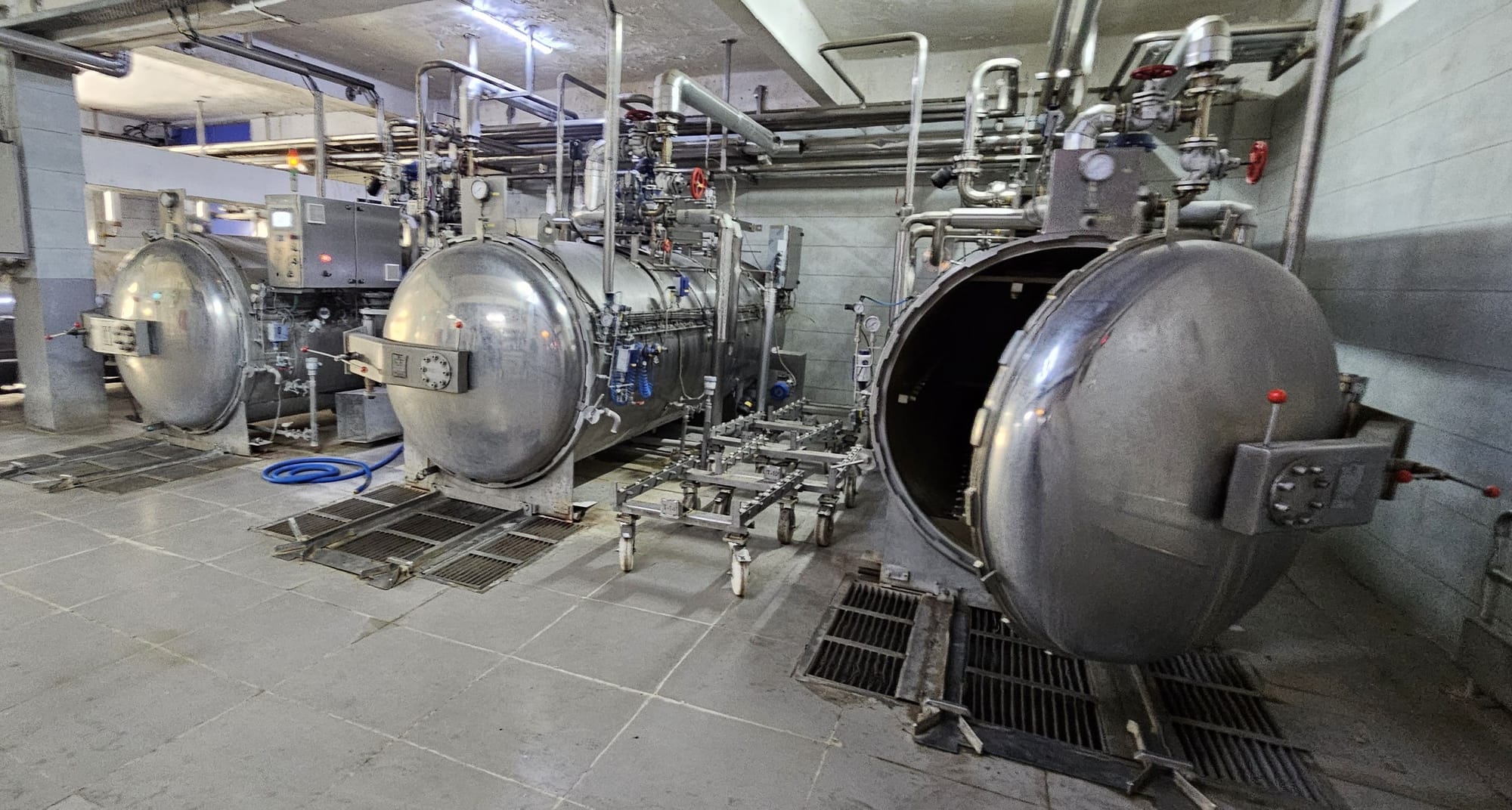
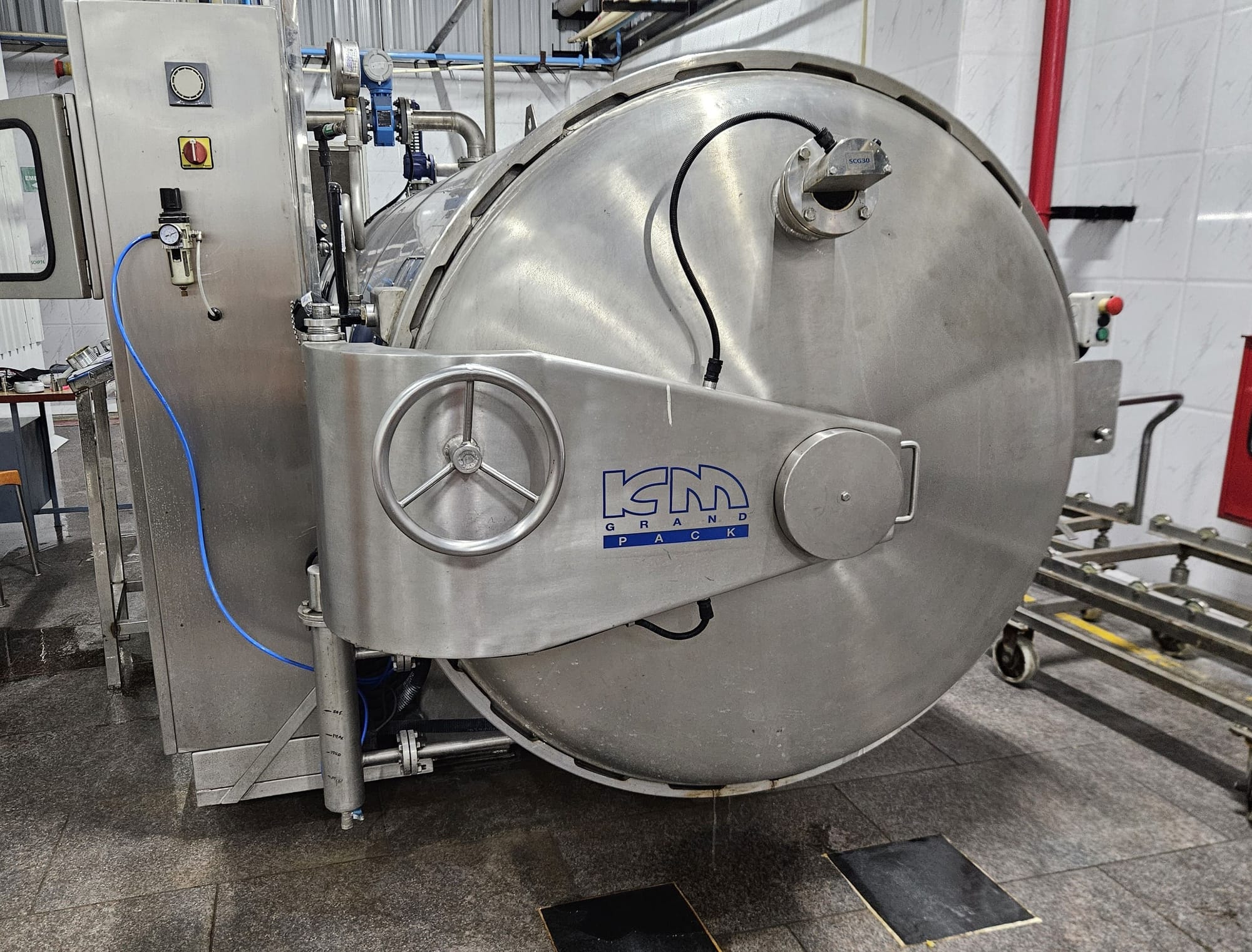
Thermal process validation is the set of studies that demonstrates a retort cycle delivers sufficient heat to every container in every load. For retorted LACF, it follows two stages.
The first is a temperature distribution (TD) study. Calibrated temperature sensors are positioned throughout a fully loaded retort to confirm that every location reaches the set temperature within the specified come-up time, and to identify the slowest-heating zone. This establishes that the equipment itself can deliver the process uniformly before any product data is collected.
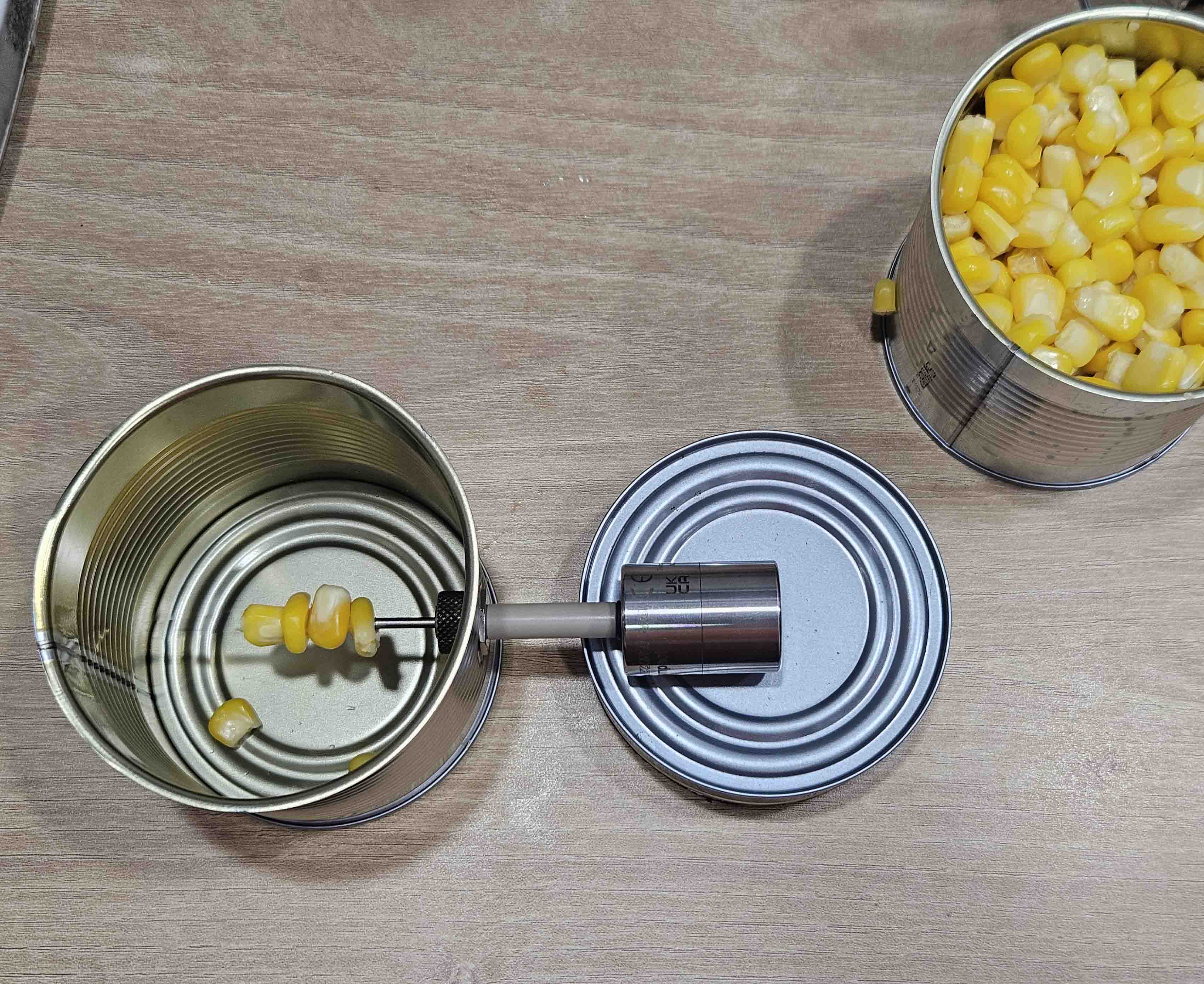
The second is a heat penetration (HP) study. Thermocouples are inserted at the cold spot of the container, the slowest-heating point within the product, and the instrumented containers are placed in the retort's slowest-heating zone. Data loggers record product temperature throughout the cycle, and the process authority uses these readings to calculate F0, and proves the safety and reliablility of the preocess
Because the results apply only to the product, container and retort tested, a validated process cannot be transferred from a similar product, a competitor or an earlier filing. A more viscous sauce, a larger pouch or a different retort alters heat transfer to the cold spot, and the delivered F0 can fall below the required minimum without any visible sign. Any such change requires the relevant studies to be repeated.
Acidified foods: establishing equilibrium pH
For acidified foods, the critical parameter is pH rather than F0. Validation must show that the product reaches an equilibrium pH of 4.6 or below at the centre of the largest particles, and how long it takes to get there. A brine pH of 3.8 provides no assurance if the interior of a chickpea or a piece of carrot remains at pH 5.2. The study must also confirm that the heat treatment, typically hot fill or pasteurisation, is sufficient to destroy vegetative pathogens, yeasts and moulds. Processors generally target a pH well below 4.6 to allow for batch-to-batch variation.
The process authority and trained supervisors
The qualified person who establishes the scheduled process is known as the process authority. It is must to have a certified individual/team who has completed a Better Process Control School or an equivalent FDA-recognised course (21 CFR 113.10 and 114.10), and processing records must be retained for three years.
Joeltech Systems conducts TD and HP studies using Ellab data loggers and supports clients through scheduled process development, and filing the SID details of the product. This validation data provides the technical basis for each SID if FDA raises a query.
Why every filing needs care: the cost of an FDA black mark
Import Alert 99-37 authorises FDA to detain LACF and acidified food shipments that lack a filed scheduled process, including products from firms that have not registered as an FCE. Once a firm or product is listed, every shipment is subject to Detention Without Physical Examination (DWPE). FDA is not required to test the product. The processor and importer carry the burden of demonstrating compliance, shipment by shipment, while the goods remain at the port. FDA may also place a processor under emergency permit control (21 CFR 108.5), under which the processor cannot ship product without an FDA permit.
FDA publishes import alerts, import refusals and warning letters on its website, and importers and retail buyers routinely review them. Removal from an import alert requires a petition to FDA supported by evidence of corrective action. The process often takes several months, and a processor can lose customers in the interim.
Most of these outcomes result from a small number of avoidable errors:
- Assuming that an FFR covers LACF or acidified foods
- Filing a SID that does not match the process operated on the plant floor
- Omitting critical factors, or specifying values that production cannot consistently maintain
- Not conducting validation through a qualified thermal process authority
- Omitting voluntary filings for genuine acid foods
- Submitting a scheduled process without supporting validation data
Conclusion
FDA LACF registration involves three linked requirements. The facility must hold a current FFR, renewed in each even-numbered year. It must be registered as a food canning establishment on Form 2541. A scheduled process must then be filed for every product and container size on the appropriate form, including voluntary Form 2541e filings for acid foods. Each of these filings rests on validation data, and FDA holds the processor responsible for the adequacy of that data.
Ready to develop your retort product?
This guide outlines the information required to complete these filings independently. For manufacturers who prefer specialist support, Joeltech Systems manages the complete process, from product classification through pH and water activity testing to temperature distribution and heat penetration studies, scheduled process development, and FCE and SID filing with FDA. Joeltech Systems also manages refilings when products, packaging or equipment change.