FDA registration for Indian Pickles: How to get your process under full FDA compliance and get your SID number
FDA registration for pickles explained for Indian exporters. Learn the difference between acid and acidified foods, why voluntary filing protects your shipments, how cold fill and hold works, and the data and process authority letter you need before filing your SID.
- Published
- 13 NOV 2026
- Reading time
- 9 min
- Written by
- Jose Thomas - PCQI Certified
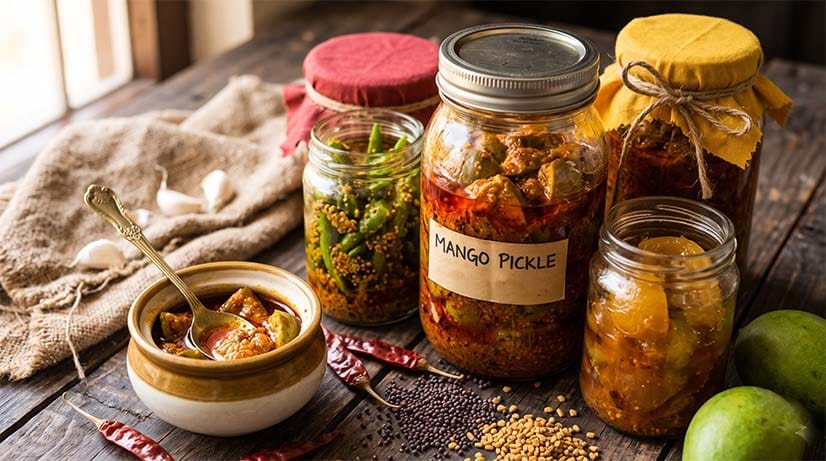
The United States is one of the biggest overseas markets for Indian pickles. Demand was built by the Indian diaspora, and ICRIER's study of India's pickle and sauce exports lists North America among the growth markets for the category (ICRIER). Selling into that market starts with FDA registration for pickles. For most Indian pickles, that includes a mandatory process filing, called a SID, for every product and every jar size before the first carton ships.
This guide concentrates on cold fill and hold, the method most Indian manufacturers use for mango, lime, garlic, green chilli, ginger and mixed vegetable pickles. Chutneys and sauces follow the same rules, and we point out where they differ.
The four registrations behind every shipment to the US.
FDA registers the facility, the canning establishment and each product separately, and a shipment needs all of them in place.
Filing | What it covers | When it is due |
|---|---|---|
Food Facility Registration (FFR) | Your factory, for any food sold in the US. Requires a US Agent and a DUNS number | Before the first shipment, renewed every even-numbered year |
Food Canning Establishment (FCE) registration, Form FDA 2541 | Your plant as a processor of acidified or low-acid canned foods | Within 10 days of starting acidified food production, and before export |
Process filing (SID), Form FDA 2541e | The scheduled process for one product in one container size | Within 60 days of FCE registration and before the product is packed |
Prior Notice and FSVP | Each shipment, plus your US importer's verification of you as a supplier | Before every arrival |
Exporters most often underestimate the SID. A 200 g jar and a 500 g jar of the same garlic pickle are two filings, and a recipe change means filing again. FDA's guidance on Forms 2541 and 2541e explains each field.
Acid food vs acidified food: which filing does your pickle need?
Which filing you need comes down to one question: was the main ingredient acidic before anything was added to it?
Why most Indian pickles are acidified foods
Under 21 CFR 114.3, an acidified food is a low-acid food to which acid or acid ingredients are added, giving a finished equilibrium pH of 4.6 or below and a water activity above 0.85. Water activity (aw) measures how much of the water in a food is available to microorganisms. Pure water has an aw of 1.0.
Garlic, ginger, green chilli, carrot, cauliflower and fish all start well above pH 4.6. Lime juice, vinegar or citric acid brings them down to a safe level, and that addition of acid is exactly what makes them acidified foods. The same applies to a mango or lime pickle once garlic, chilli or carrot goes in, and to most tomato and onion chutneys and sauces. Most Indian pickles therefore fall into this category, and FCE registration and a SID are mandatory before export.
Acid foods: why you should still file voluntarily
A few pickles are made only from ingredients that are already acidic. Lime, lemon, raw mango and tamarind all have a natural pH below 4.6, so a pickle made from them with just spices, salt and oil is an acid food, not an acidified one. A small amount of a low-acid ingredient does not change this, provided the finished pH stays close to that of the main acidic fruit.
It is strongly recommended to file a SID for acidified food. The reason is what happens at the US port. The FDA officer reviewing your shipment sees the word "pickle" on the entry and has no way of knowing its pH from the paperwork. If there is no filing on record, the shipment can be held until you prove the product is an acid food, and that proof is far harder to supply from a detained container than before it ships.
A voluntary filing uses the same Form 2541e with the voluntary option selected. You submit the pH and weight of each ingredient and the finished equilibrium pH. FDA reviews the data and either records the product as a voluntary submission or tells you it looks like an acidified food. Either way, you know where the product stands before it leaves India, and your US importer has a filing to point to.
Cold fill and hold: how it works and why the process authority sets it
Once a pickle is classed as an acidified food, FDA wants to know how you make it safe. For most Indian manufacturers the answer is cold fill and hold.
How the cold fill and hold step works
The pickle is prepared and acidified, filled into jars and sealed at room temperature, with no cooking or pasteurising step after filling. The sealed batch then stays in the plant for a fixed hold period, at or above a fixed minimum temperature, before it is dispatched. Two things happen during that hold. The acid moves from the brine or oil into the centre of every piece until the whole jar reaches its equilibrium pH, and the acid kills any harmful bacteria that came in with the vegetables and spices.
Why the hold is mandatory, and what it achieves
Acidifying below pH 4.6 stops Clostridium botulinum, because its spores cannot germinate or produce toxin at that pH. It does not instantly kill other pathogens. E. coli O157:H7, Salmonella and Listeria monocytogenes arrive on raw vegetables and in spices that were never heated, and they can survive in an acidic brine for days.
21 CFR 114.80 requires the process to destroy these organisms. A hot fill process does this with heat in minutes. A cold filled pickle has no heat step, so the hold is the step that kills them. Cut it short and the jars go out with live pathogens still inside. Completed properly, the hold delivers a jar that has reached a safe pH all the way through, with pathogens reduced to safe levels. Preservatives such as sodium benzoate and potassium sorbate are added to stop yeasts and moulds from spoiling the product, but they do not replace the hold.
How long the hold must be depends on the product's equilibrium pH, the acid used and the hold temperature. At the same pH, acetic acid from vinegar kills bacteria faster than citric acid. Cold slows the kill, so a hold that works in a 30°C warehouse in May will not deliver the same result at 10°C in a north Indian winter. That is also why the hold belongs in the plant, under your control and on your records, rather than in a shipping container at sea. So this process needs to be established by a trusted process authority.
The process authority defines the hold before you file
Because these are acidified foods, nobody can simply choose a hold time. The cold fill and hold step must be designed on established scientific research that FDA accepts as a basis for these processes. It must then be defined and established by a process authority, a qualified expert in acidification, before the pickle can be filed with FDA and exported. 21 CFR 114.83 makes this a legal requirement.
The process authority sets the limits for your formulation: maximum equilibrium pH, the acid and its minimum concentration, largest piece size, preservative levels, and minimum hold time and temperature. A recipe outside what the published research covers, such as one relying on citric acid, a thick oil layer or very large pieces, may need product-specific validation data first. These limits become the critical factors in your SID, and every batch has to meet them.
Equilibrium pH, acidification time and water activity: the numbers FDA asks for
Equilibrium pH is the pH reached once the acid has spread evenly through the brine or oil and into the centre of every piece. This is where many filings go wrong. A brine sample can read pH 3.6 on day one while the centre of a garlic clove is still above 5. Large mango chunks, whole cloves, thick lime quarters and an oil coating all slow the acid on its way in.
This is why FDA asks for an acidification time. Under 21 CFR 114.80, the product must reach pH 4.6 or below within the time set in the scheduled process, and stay there. Until it reaches that point, the jar holds a low-acid food in a sealed container. The acidification time you file must come from pH-versus-time data on production batches. That means blending the solids and liquid together, measuring at set intervals, and continuing until the reading stops changing.
The measurement method is also specified, in 21 CFR 114.90.
Water activity decides whether Part 114 applies at all. A product with an aw of 0.85 or below falls outside the acidified food rules. Some high-salt or sun-dried pickles and high-sugar sweet chutneys come close to that line. Claiming the exemption takes measured aw data from several batches, because an estimate based on the recipe will not stand up.
The data you need before filing Form 2541e
All of this work feeds a single filing, and FDA expects the evidence to exist before the form is submitted.
A process authority letter is mandatory
A SID records a scheduled process, and FDA requires that scheduled process to be established by a qualified person with expert knowledge of acidification. For exporters, this means an independent, third-party process authority letter that states every critical factor for the product. A lab report or an FSSAI licence does not meet the requirement, and without the letter there is nothing to file. FDA enforces this point. A warning letter issued in January 2026 cited a processor under 21 CFR 114.83 for operating without a scheduled process established by a qualified person.
Your pre-filing data checklist
Data group | What to prepare | Why FDA needs it |
|---|---|---|
Formulation | Percentage by weight of every ingredient, the pH of each, acid type and amount, salt content, preservative levels | Shows whether the product is an acid or acidified food, and what controls its safety |
Finished product | Equilibrium pH from at least three production batches, a pH-versus-time curve, water activity, and Brix for sweet chutneys and sauces | Proves the product reaches pH 4.6 or below within the filed acidification time and stays there |
Packaging | Container type and size, fill weight, solid-to-liquid ratio, maximum piece size, closure type | Each container size is a separate filing, and piece size and fill ratio affect how fast acid penetrates |
Process and validation | Process flow diagram, acidification method, minimum hold time and temperature, the process authority letter, supporting validation data | Defines the scheduled process FDA will inspect against |
The fields themselves are set out on Form FDA 2541e. If you are putting this together for the first time, Joeltech Systems can help you develop and review it before you file.
Import alerts 99-37 and 99-38: why one missing filing can stop every shipment
The cost of getting these filings wrong shows up at the US port. Import Alert 99-37 lets FDA detain acidified and low-acid canned foods with no scheduled process on file, including products from firms that never registered an FCE. Once a firm is on the alert's Red List, every later shipment can be held under Detention Without Physical Examination (DWPE), with no testing needed
A detained container runs up demurrage at the port, and refused goods must be re-exported or destroyed. Removal from the Red List requires evidence of correction submitted to FDA's Division of Import Operations, and the review is rarely quick. Indian pickle makers have already been caught by this. In 2019 FDA issued a warning letter to an Indian processor whose "Chilli Pickle" had no scheduled process on file, warning that its products could be refused admission. Therefore, exporters need to make sure that the SIDs are on file wiht FDA before shipment is done.
Common mistakes Indian pickle exporters make
Most of the detentions and filing problems we see trace back to a handful of assumptions.
Common assumption | What actually applies |
|---|---|
"Our Food Facility Registration covers us." | FFR registers the facility only. Acidified pickles also need an FCE registration and a SID for each product and jar size. |
"The brine read pH 3.8 on day one." | Only equilibrium pH counts, measured on blended solids and liquid once the filed acidification time has passed. |
"The hold can happen on the ship." | The hold must meet the filed minimum temperature and be documented. Complete it in the plant. |
"One SID covers every jar size." | Each product needs a filing for each container size, and recipe changes need a new filing. |
How Joeltech Systems helps pickle, chutney and sauce exporters
Joeltech Systems works with Indian manufacturers who are preparing to export pickles, chutneys and sauces to the US, or who are already shipping and need their filings put in order.
Most projects start with classification. We review the formulation and ingredient pH data to establish whether each product is an acid or acidified food, and where a product qualifies as an acid food we prepare the case for voluntary filing. For these products, we design the cold fill and hold process and develop the scheduled process and process authority letter that the SID depends on. Where a formulation falls outside the published research, for example an oil-based or citric acid pickle with large pieces, we support the validation work needed to establish a safe hold.
We then prepare the FCE registration, the SID filings and any voluntary filings so that what you submit matches what your plant actually does. If a shipment has already been detained, or your firm is on Import Alert 99-37, we help assemble the evidence FDA needs to release it.
Conclusion
FDA registration for pickles follows a fixed order. Classify each product, filing voluntarily for acid foods. For acidified pickles, have a process authority establish the cold fill and hold step and acidification time from your own equilibrium pH data. File the FCE registration and a SID for every product and jar size, then run the plant exactly as filed and keep the records for three years. Exporters who do this before the first shipment stay off import alerts and give US importers the documents they need to list the product.
Ready to export your pickles to the US?
Whether you are preparing your first US shipment or correcting filings after a detention, Joeltech Systems can take you from product classification and cold fill hold design through to process authority support and FDA filing. Contact Joeltech Systems to discuss your pickles, chutneys and sauces and your plans for the US market.